Buy multigamers.eu ?
We are moving the project
multigamers.eu .
Are you interested in purchasing the domain
multigamers.eu ?
domain@kv-gmbh.de · 0541-91531010
Buy multigamers.eu ?
What is the wave-particle duality?
Wave-particle duality is a fundamental concept in quantum mechanics that states that particles, such as electrons and photons, can exhibit both wave-like and particle-like behavior. This means that they can behave as waves, with characteristics such as interference and diffraction, and also as particles, with characteristics such as position and momentum. This duality challenges our classical understanding of particles and waves as distinct entities, and is a key aspect of understanding the behavior of matter and energy at the quantum level. **
Does the human have particle and wave characteristics?
Yes, humans and all matter have both particle and wave characteristics. This is known as wave-particle duality, a fundamental concept in quantum mechanics. At the quantum level, particles such as electrons and photons can exhibit wave-like behavior, as demonstrated by phenomena like diffraction and interference. This duality is a key aspect of the behavior of matter and energy at the smallest scales of the universe. **


Similar search terms for Wave-particle
Top-Angebote
Products related to Wave-particle:
-
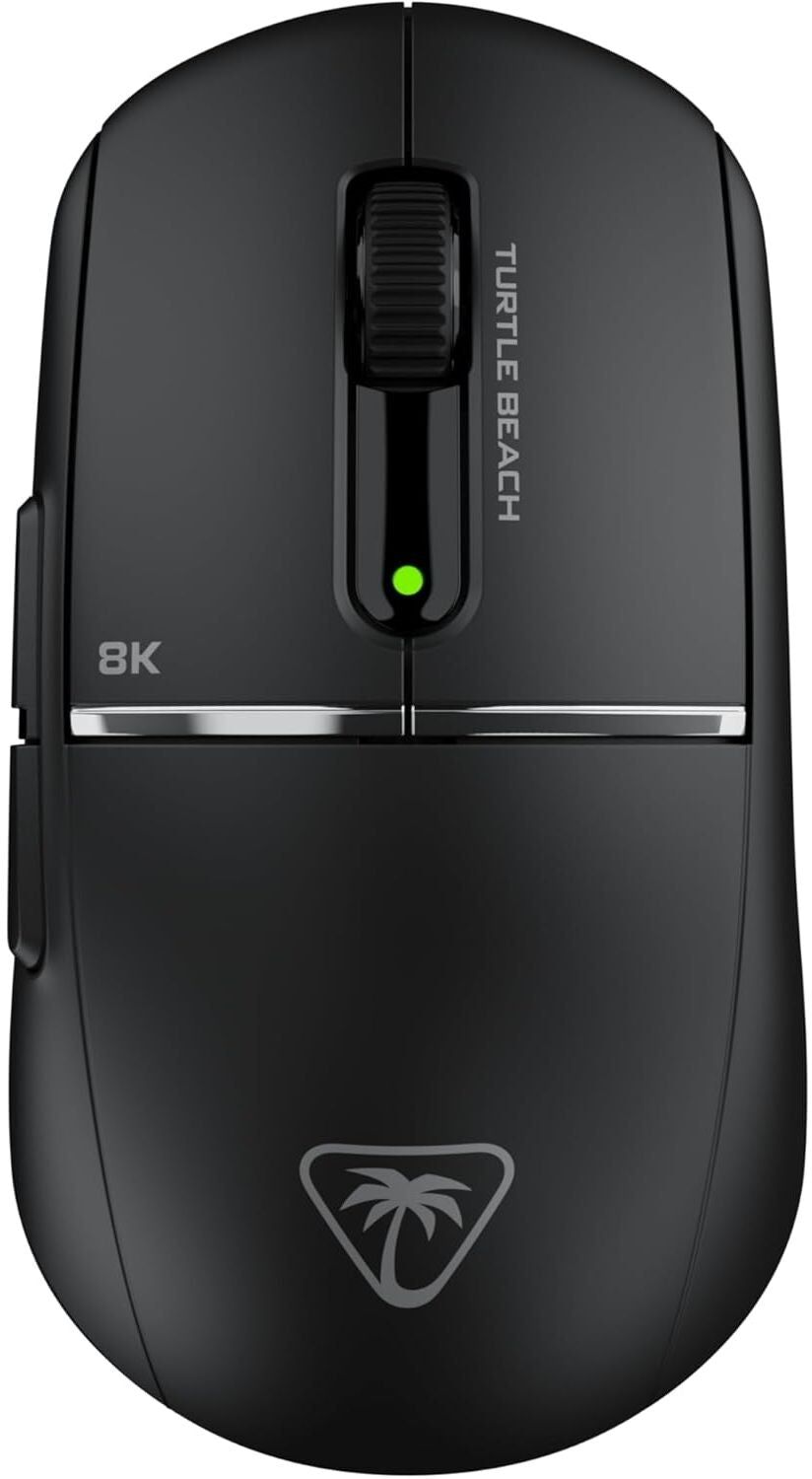
Turtle Beach Burst II Pro Black Wireless Esports Gaming MouseOverview The Turtle Beach Burst II Pro Wireless is a high-performance esports gaming mouse engineered for speed, accuracy, and competitive gameplay. Featuring an ultra-lightweight design, a high-precision 30K DPI optical sensor, and an ultra-fast 8K polling rate, this mouse is built to deliver lightning-fast response times and reliable wireless performance. Designed for serious PC gamers, it combines precision engineering with long battery life to support extended gaming sessions. Key Features • Ultra-lightweight design at approximately 57g for fast movements • Owl-Eye optical sensor with up to 30,000 DPI precision • True 8,000Hz wireless polling rate for ultra-low latency • Titan optical switches rated for up to 100 million clicks • Up to 150-hour battery life depending on polling settings • Dual wireless connectivity including 2.4GHz and Bluetooth • Symmetrical shape suitable for multiple grip styles • Up to 8 programmable buttons for custom controls • Smooth tracking on multiple surfaces including glass • Software customisation for DPI and performance tuning Benefits The Burst II Pro is ideal for competitive gamers who require fast reaction times and precision tracking. Its lightweight build helps reduce fatigue during long gaming sessions, while the 8K polling rate ensures extremely responsive input for FPS and esports titles. With flexible connectivity and long battery life, it is also suitable for users wanting a reliable wireless gaming setup without constant charging. Specifications Specification Details Brand Turtle Beach Model Burst II Pro Colour Black Sensor Owl-Eye Optical Sensor DPI Up to 30,000 DPI Polling Rate Up to 8000Hz Connectivity 2.4GHz Wireless, Bluetooth, USB Buttons Up to 8 Programmable Switch Type Titan Optical Switches Weight Approx. 57g Battery Life Up to 150 Hours Design Symmetrical Usage Esports / Gaming79,98 £*Shipping: 0,00 £Secure redirect to the provider



-
Do all quantum objects obey the wave-particle duality?
Yes, all quantum objects exhibit wave-particle duality, which means they can exhibit both wave-like and particle-like behavior. This duality is a fundamental aspect of quantum mechanics and is observed in phenomena such as the double-slit experiment, where particles exhibit interference patterns characteristic of waves. This duality is a key feature of quantum theory and is essential for understanding the behavior of quantum objects. **
-
Is 0 a virtual particle?
No, 0 is not a virtual particle. Virtual particles are particles that exist temporarily as intermediate states in particle interactions, but they do not correspond to real, observable particles. In contrast, 0 is a number that represents the absence of quantity or value, and it does not have the properties of a particle. **
-
What is the difference between the wave model and the particle model?
The wave model describes light as a wave that travels through space, exhibiting properties like interference and diffraction. In contrast, the particle model views light as a stream of particles called photons that carry energy and momentum. The wave model explains phenomena like interference patterns and polarization, while the particle model helps to understand effects like the photoelectric effect and Compton scattering. Both models are used in different contexts to describe the behavior of light. **
-
In which year and with which experiment was the wave-particle duality proven?
The wave-particle duality was proven in 1927 through the famous double-slit experiment conducted by physicist Thomas Young. This experiment demonstrated that light exhibits both wave-like and particle-like properties, leading to the development of the concept of wave-particle duality in quantum mechanics. **


What is the difference between the wave and the particle model of light?
The wave model of light describes light as a continuous wave with properties such as wavelength, frequency, and amplitude. This model explains phenomena such as interference and diffraction. On the other hand, the particle model of light, also known as the photon model, describes light as a stream of discrete particles called photons. This model explains phenomena such as the photoelectric effect and the emission of light from atoms. The wave model is more suitable for explaining the behavior of light in certain situations, while the particle model is more suitable for explaining other phenomena. **
How can one imagine a photon within the framework of wave-particle duality?
Within the framework of wave-particle duality, a photon can be imagined as both a wave and a particle simultaneously. As a wave, it exhibits properties such as interference and diffraction, similar to other waves. As a particle, it carries discrete packets of energy and momentum, and can interact with matter as a discrete entity. This duality means that a photon's behavior is best described by both wave and particle characteristics, and it can exhibit wave-like behavior in some situations and particle-like behavior in others. This dual nature of a photon is a fundamental aspect of quantum mechanics. **
Top-Angebote
Products related to Wave-particle:
-
Uplift Essentials Colorful Solar Particle Ball Wind Chime Light Colorful Solar Particle Ball Wind Chime LightElevate your outdoor environment with a highperformance lighting solution that masterfully blends auditory charm with vibrant visual artistry. This colorful solar particle ball wind chime light is the ultimate solution for homeowners and decorators...58,97 $*Shipping: 0,00 $Secure redirect to the provider
-
What is the wave-particle duality?
Wave-particle duality is a fundamental concept in quantum mechanics that states that particles, such as electrons and photons, can exhibit both wave-like and particle-like behavior. This means that they can behave as waves, with characteristics such as interference and diffraction, and also as particles, with characteristics such as position and momentum. This duality challenges our classical understanding of particles and waves as distinct entities, and is a key aspect of understanding the behavior of matter and energy at the quantum level. **
-
Does the human have particle and wave characteristics?
Yes, humans and all matter have both particle and wave characteristics. This is known as wave-particle duality, a fundamental concept in quantum mechanics. At the quantum level, particles such as electrons and photons can exhibit wave-like behavior, as demonstrated by phenomena like diffraction and interference. This duality is a key aspect of the behavior of matter and energy at the smallest scales of the universe. **
-
Do all quantum objects obey the wave-particle duality?
Yes, all quantum objects exhibit wave-particle duality, which means they can exhibit both wave-like and particle-like behavior. This duality is a fundamental aspect of quantum mechanics and is observed in phenomena such as the double-slit experiment, where particles exhibit interference patterns characteristic of waves. This duality is a key feature of quantum theory and is essential for understanding the behavior of quantum objects. **
-
Is 0 a virtual particle?
No, 0 is not a virtual particle. Virtual particles are particles that exist temporarily as intermediate states in particle interactions, but they do not correspond to real, observable particles. In contrast, 0 is a number that represents the absence of quantity or value, and it does not have the properties of a particle. **
Similar search terms for Wave-particle
-
Turtle Beach Burst II Pro Black Wireless Esports Gaming MouseOverview The Turtle Beach Burst II Pro Wireless is a high-performance esports gaming mouse engineered for speed, accuracy, and competitive gameplay. Featuring an ultra-lightweight design, a high-precision 30K DPI optical sensor, and an ultra-fast 8K polling rate, this mouse is built to deliver lightning-fast response times and reliable wireless performance. Designed for serious PC gamers, it combines precision engineering with long battery life to support extended gaming sessions. Key Features • Ultra-lightweight design at approximately 57g for fast movements • Owl-Eye optical sensor with up to 30,000 DPI precision • True 8,000Hz wireless polling rate for ultra-low latency • Titan optical switches rated for up to 100 million clicks • Up to 150-hour battery life depending on polling settings • Dual wireless connectivity including 2.4GHz and Bluetooth • Symmetrical shape suitable for multiple grip styles • Up to 8 programmable buttons for custom controls • Smooth tracking on multiple surfaces including glass • Software customisation for DPI and performance tuning Benefits The Burst II Pro is ideal for competitive gamers who require fast reaction times and precision tracking. Its lightweight build helps reduce fatigue during long gaming sessions, while the 8K polling rate ensures extremely responsive input for FPS and esports titles. With flexible connectivity and long battery life, it is also suitable for users wanting a reliable wireless gaming setup without constant charging. Specifications Specification Details Brand Turtle Beach Model Burst II Pro Colour Black Sensor Owl-Eye Optical Sensor DPI Up to 30,000 DPI Polling Rate Up to 8000Hz Connectivity 2.4GHz Wireless, Bluetooth, USB Buttons Up to 8 Programmable Switch Type Titan Optical Switches Weight Approx. 57g Battery Life Up to 150 Hours Design Symmetrical Usage Esports / Gaming79,98 £*Shipping: 0,00 £Secure redirect to the provider
-
17 Stories Milijan Foldable Particle Board / Chipboard Floating Desk WhiteThis trendy, wall-mounted folding desk is a perfect way to save space in small and narrow rooms. It can be quickly and easily mounted on the wall, ready to be folded out for use as a desk or kitchen table at any time. Its stylish yet understated design will look lovely in any interior. Note: Please mind that there will be nail holes on the surface of the product, please refer to photo. 17 Stories Colour: White69,99 £*Shipping: 0,00 £Secure redirect to the provider
-
17 Stories Milijan Foldable Particle Board / Chipboard Floating Desk GreyThis trendy, wall-mounted folding desk is a perfect way to save space in small and narrow rooms. It can be quickly and easily mounted on the wall, ready to be folded out for use as a desk or kitchen table at any time. Its stylish yet understated design will look lovely in any interior. Note: Please mind that there will be nail holes on the surface of the product, please refer to photo. 17 Stories Colour: Grey67,99 £*Shipping: 0,00 £Secure redirect to the provider
-
What is the difference between the wave model and the particle model?
The wave model describes light as a wave that travels through space, exhibiting properties like interference and diffraction. In contrast, the particle model views light as a stream of particles called photons that carry energy and momentum. The wave model explains phenomena like interference patterns and polarization, while the particle model helps to understand effects like the photoelectric effect and Compton scattering. Both models are used in different contexts to describe the behavior of light. **
-
In which year and with which experiment was the wave-particle duality proven?
The wave-particle duality was proven in 1927 through the famous double-slit experiment conducted by physicist Thomas Young. This experiment demonstrated that light exhibits both wave-like and particle-like properties, leading to the development of the concept of wave-particle duality in quantum mechanics. **
-
What is the difference between the wave and the particle model of light?
The wave model of light describes light as a continuous wave with properties such as wavelength, frequency, and amplitude. This model explains phenomena such as interference and diffraction. On the other hand, the particle model of light, also known as the photon model, describes light as a stream of discrete particles called photons. This model explains phenomena such as the photoelectric effect and the emission of light from atoms. The wave model is more suitable for explaining the behavior of light in certain situations, while the particle model is more suitable for explaining other phenomena. **
-
How can one imagine a photon within the framework of wave-particle duality?
Within the framework of wave-particle duality, a photon can be imagined as both a wave and a particle simultaneously. As a wave, it exhibits properties such as interference and diffraction, similar to other waves. As a particle, it carries discrete packets of energy and momentum, and can interact with matter as a discrete entity. This duality means that a photon's behavior is best described by both wave and particle characteristics, and it can exhibit wave-like behavior in some situations and particle-like behavior in others. This dual nature of a photon is a fundamental aspect of quantum mechanics. **
* All prices are inclusive of VAT and, if applicable, plus shipping costs. The offer information is based on the details provided by the respective shop and is updated through automated processes. Real-time updates do not occur, so deviations can occur in individual cases. ** Note: Parts of this content were created by AI.